




OPEN LECTURE Universiteto st. 10, room 159, 14.00-14.30 hrs. December 11th Uncovering the role of negative modulator of ABA-driven stomatal closure in barley
Uncovering the role of negative modulator of ABA-driven stomatal closure in barley
Plant responses to drought stress: from ABA hormone signals and stomatal responses to the mysteries of transcriptomics and proteomics. The lecture and presentation of his research will be given by Kacper Milanowski, PhD student at the University of Silesia in Katowice
Universiteto st. 10,
Faculty of Natural Sciences,
room 159, 14.00-14.30 hrs.
December 11th

On November 27th at 4:00 PM in Auditorium 431, Professor Skirmantas Kriaučionis from the University of Oxford will give a lecture titled “How do DNA modifications influence DNA mutations?”
On November 27th at 4:00 PM in Auditorium 431, Professor Skirmantas Kriaučionis from the Ludwig Institute for Cancer Research at the University of Oxford (UK) will give a lecture titled “How DNA modifications influence DNA mutations?”
Research Areas of Professor Skirmantas Kriaučionis
The primary objective of the research program is to elucidate the molecular function of DNA modifications in normal and cancer cells. By employing biochemical and in vivo methods, the research investigates the impact of DNA modifications on transcription, inheritance, mutation rates, and nuclear organization. These fundamental studies in DNA biology help identify defects arising in cancer and develop novel targeted therapies.
Research on DNA Modifications:
Until recently, 5-methylcytosine (5mC) was the only known DNA modification in mammalian cells. Professor S. Kriaučionis’s research group, together with other investigators, discovered 5-hydroxymethylcytosine (5hmC)—a compound formed when methylated cytosine is acted upon by oxygenases of the TET enzyme family.
In dividing cells, 5hmC acts as an intermediate product of demethylation.
In post-mitotic (non-dividing) cells, 5hmC is a stable base whose function is not yet fully understood.
The Influence of DNA Modifications on Mutations:
One of the most recent studies addressed the hypothesis that stable 5hmC might influence DNA mutation rates, given that 5mC is known to be associated with an increased frequency of C-to-T transitions. Computational analysis of 5hmC localization in normal human tissues and mutation rates in cancer revealed that 5hmC exhibits a lower mutation frequency than 5mC.
Epigenetic Nucleotide Metabolism and Cancer Therapy:
Although the presence of 5hmC in the DNA strand reduces the risk of mutation, its presence in the nucleotide pool (used for the synthesis of new DNA strands) is mutagenic. 5hmC and other biologically modified bases can enter the nucleotide pool through the recycling of epigenetically modified DNA.
Studies examining epigenetic nucleotide metabolism have shown that:
-
Cytidine monophosphate kinase 1 (CMPK1) limits the production of 5hmdCTP and prevents the direct incorporation of this modified base into DNA.
-
Cytidine deaminase (CDA) deaminates 5hmdC, converting it into 5hmdU, which is then phosphorylated and incorporated into DNA, causing DNA damage.
Current research is investigating whether this phenomenon could be applied to personalized cancer therapy targeting tumors with elevated CDA expression.
Recent publications:
Platelets sequester extracellular DNA, capturing tumor-derived and free fetal DNA. Murphy L. et al, (2025), Science, 389
DNA polymerase ε produces elevated C-to-T mutations at methylated CpG dinucleotides. (2024), Nature genetics, 56, 2304 – 2305
Human DNA polymerase ε is a source of C>T mutations at CpG dinucleotides. Tomkova M. et al, (2024), Nature Genetics, 56, 2506 – 2516
Absolute quantitative and base-resolution sequencing reveals comprehensive landscape of pseudouridine across the human transcriptome. Xu H. et al, (2024), Nature Methods
Focused Screening Identifies Different Sensitivities of Human TET Oxygenases to the Oncometabolite 2-Hydroxyglutarate. Belle R. et al, (2024), Journal of medicinal chemistry
19-29th of November, 2025 INVITATION TO PARTICIPATE in the practical training program ”Management for Business Start-up’s” (free of charge)
INVITATION TO PARTICIPATE in the practical training program ”Management for Business Start-up’s”
(free of charge)
During the 19-29th of November, 2025 we invite you to participate in the free of charge practical training program “Management for Business Start-up’s”. The aim of this training – to learn how practically to prepare business plan and budget of the own firm.
Participants will receive certificates of course completion from Vytautas Magnus University. Number of ECTS: 2 (50 hours); Learning and assessment methods: Project-Based Learning The content of the training programme (hybrid):
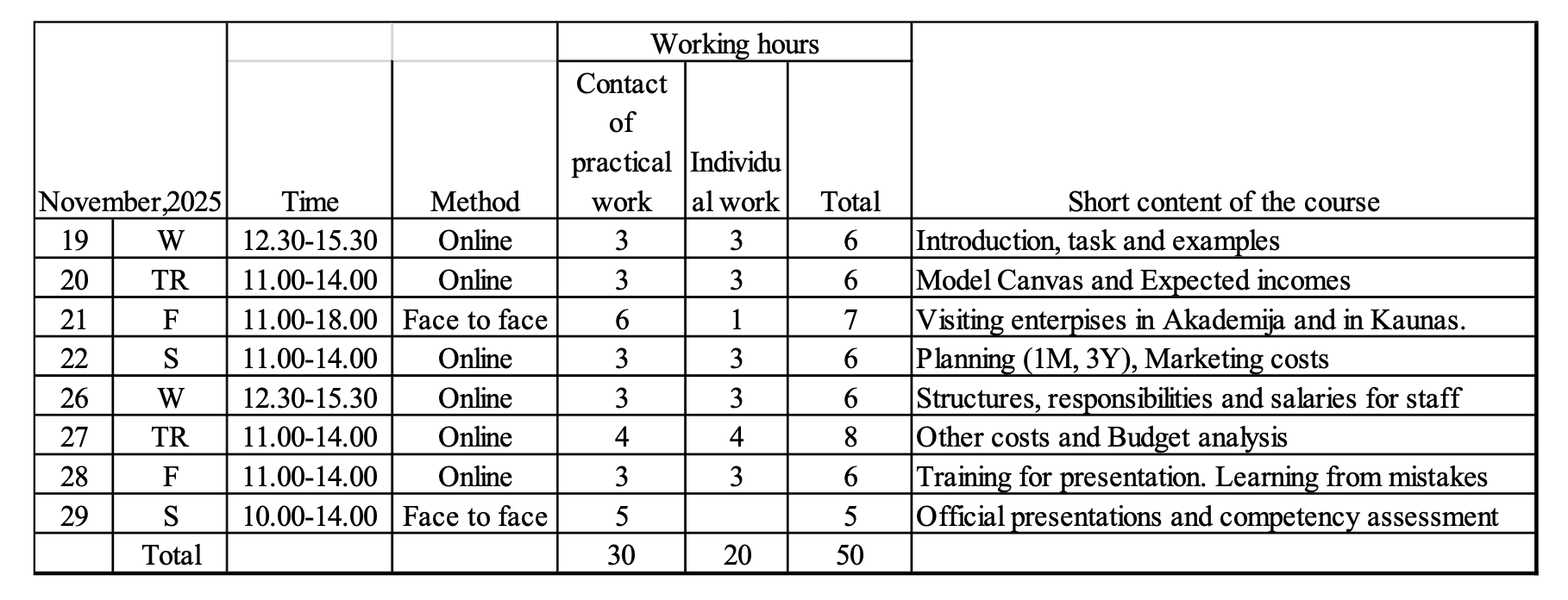
Course venue ( for “face to face” meeting): Vytautas Magnus University (in Agriculture Academy, Universiteto g. 10, Akademija, 53367 Kauno r. sav.
Course prerequisites: Basics knowledge of Business management, Excel and Power point and English language for communications
Maximum number of students in the course: 20 (or about 10 teams); Participants: Bachelor’s and Master’s studies. Priority is given to participants, who have registered earlier and meet the requirements.
Learning outcomes and competencies of the training programme.
Participants will gain knowledge and practical skills in project management, marketing, accounting,
budgeting and teamwork. They will also improve their work skills in Excel and strengthen their public
speaking skills.
At the end of the course, participants will have to prepare a presentation in which they will present their
business idea to all participants, members of the commission and interested parties.
During the course, students are offered an interesting educational program: visiting business companies
near Kaunas city and excursions around the campus of the VMU Academy of Agriculture.
Link for registration (copy to browser) https://forms.office.com/e/ZavUj9yLrC
Registration will be closed: 12.11.2025, 11 a.m; Participants will be informed about the start of the
training and a link will be sent to them.– 14.11.2025.
Main course guide: prof. dr. Jan Žukovskis, jan.zukovskis@vdu.lt
Professor Dr. Murat Kaya (Istanbul Technical University, Turkey) will give a lecture “Material Transfer from Nature to Technology” 11-05 at 15:30
Date of the presentation: November 5th (Wednesday), at 15:30 Universiteto st. 10 akademija, Kaunas auditorium 431
Abstract
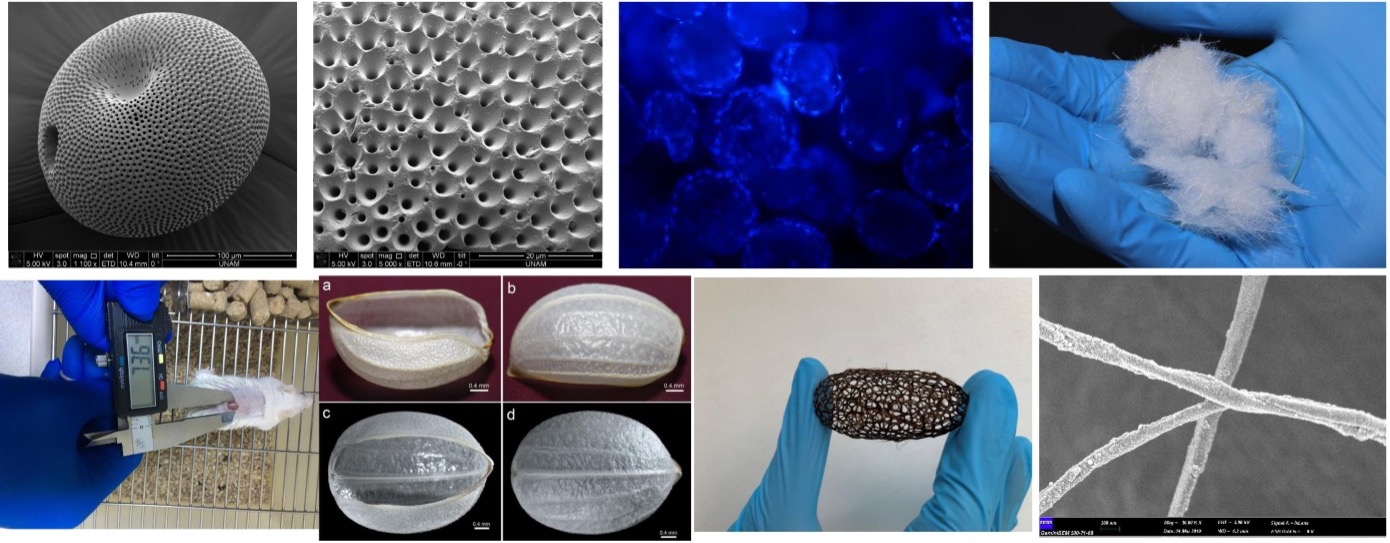
Biopolymers have a wide use in bioengineering due to their antimicrobial, antioxidant, biocampatible and non-toxic properties. In this seminar, production of three dimensional biomaterials from different organisms together with their characterization and application areas will be presented. The biomaterials that will be mentioned in this presentation will be a summary of our previous work. And these biomaterials are chitin, chitosan, cellulose and biosilica. The application areas of the produced 3D materials are i) drug loading and releasing properties, ii) food coating to increase the shelf life, iii) bio-cup production for healthy weight loss, iv) biological mesh samples to be used in surgical operations, v) production of multifunctional porous bioactive micro silica beads from a sponge for biomedical applications.
Nature has been producing fascinating materials since millions of years currently under explored. My primary research goals are i) to discover these secret materials in the nature (from plant or animal bodies), ii) to characterize them in detail by the state of the art techniques, iii) to solve how these materials naturally assemble in nano scale, iv) to establish inter disciplinary collaborations to explore the uses of these materials in various applications and v) to transfer them in to the industry for the benefit of the society.
Short biography
Professor Dr. Murat Kaya received his BSc degree from Karadeniz Technical University in 2003. He completed his Master’s Degree (2005) and Ph.D. (2008) at Ankara University, Institute of Science, Department of Biology. He worked at Gent University (Belgium) for 1 year under the Erasmus Program in 2006. He studied at BARRALAB for 1 year in London Imperial College (UK) under the Lifelong Learning Program in 2008. He worked as a visiting scientist at AMEMIYA LAB at University of California Merced for 1 year under TÜBİTAK 2219 program in 2017-2018. He was awarded as a young scientist of the year (2018) in Turkey by “Bilim Kahramanları Derneği”. Dr. Kaya worked as a visiting scientist at Department of Chemistry, University of Cambridge, UK as a visiting professor funded by Royal Society and TUBITAK 2219. And then Dr. Kaya joined to Department of Chemical and Environmental Engineering, University of Basque Country, Spain funded by Maria Zambrano Fellowship in 2023. After, Dr. Kaya worked as a Head of New Product Development at CuanTec Ltd. Scotland, UK for one year. Dr. Kaya is currently working as a faculty member at Department of Molecular Biology and Genetics, Istanbul Technical University, Turkey.
Public lecture will be given by Dr. Eglė Galdikaitė-Brazienė
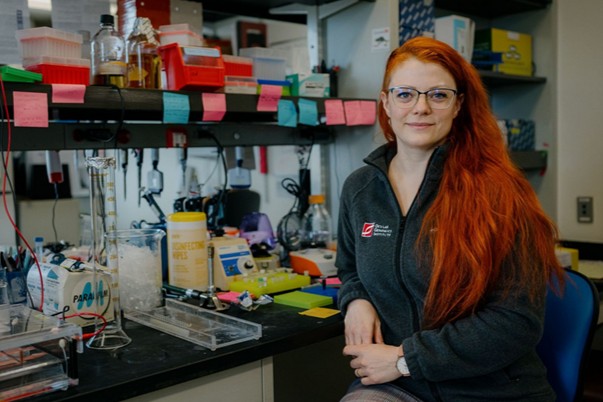
On Monday, September 22nd, at 2:00 PM, Dr. Eglė Galdikaitė-Brazienė from Harvard University will give a public lecture at the Research Institute of Natural and Technological Sciences of Vytautas Magnus University (VMU), Faculty of Natural Sciences (Universiteto g. 10-427, Akademija, Kaunas r.). Dr. Galdikaitė-Brazienė is currently working at the Genomics Institute of Mass Eye and Ear, Department of Ophthalmology, Harvard Medical School (USA).
Dr. E. Galdikaitė-Brazienė’s research focuses on the application of stem cell (iPSC) technologies for the development of retinal organoids and the use of CRISPR/Cas9 genome editing methods for the treatment of hereditary degenerative retinal diseases. This is one of the most advanced fields in biomedicine, which not only allows for a better understanding of the developmental mechanisms of genetic eye diseases but also for the search for potential future treatment strategies.
The topic of the public lecture is “iPSC derived retinal organoids and CRISPR/Cas9 genome editing to model retinal degenerations”.
This lecture is an excellent opportunity for everyone interested in biomedical sciences, genetics, molecular biology, and medical innovations to learn about world-class research and its practical application in the future of medicine.
The lecture will be held in English.
BalTick25 – Baltic Tick Conference Will Take Place at VMU
We are pleased to announce that the BalTick25 – Baltic Tick Conference will take place at Vytautas Magnus University (VMU) in Kaunas, Lithuania, on October 1-3, 2025.
BalTick25 will focus on the latest knowledge and findings related to ticks and tick-borne diseases, providing an excellent platform for both experienced and early-career researchers to present and discuss their innovative research.
Main topics:
- Biology and Ecology of Ticks
- Ticks as Disease Vectors
- Diagnosis and Treatment of Tick-Borne Diseases
- Prevention and Tick Control
- Veterinary Aspects
- Innovative Methods and Technologies
Plenary speakers for BalTick25 – Baltic Tick Conference:
- Per-Eric Lindgren, Professor in Medical Microbiology, Linköping University, SwedenPer-Eric Lindgren, Professor and Discipline Coordinator in Microbiology including Clinical Microbiology, Head of Division of Inflammation and Infection, Department of Biomedical and Clinical Sciences, Linköping University, Linköping, Sweden, and research leader, Laboratory Medicine, County Hospital Ryhov, Jönköping, Sweden.
Per-Eric Lindgren has extensive and long experience in One Health aspects of ticks and tick-borne infections including pathogenesis, molecular epidemiology and diagnostics. Lindgren have worked as project leader and coordinator on projects such as ScandTick Innovation, a project within the EU-Interreg ÖKS-programme, and NorthTick, a project within the EU-Interreg North Sea Region – programme. Lindgren is leading a research group at Linköping University and County Hospital Ryhov, Jönköping, consisting of several PhD-students, technicians and project students.
- Snorre Stuen, Professor emeritus, University of Life Sciences, Faculty of Veterinary Medicine, NorwaySnorre Stuen (MSc, DVM, PhD, Dr. philos) is a professor emeritus at the University of Life Sciences in Norway and has been working with ticks and tick-borne infections in several national and international projects for nearly 40 years. He has especially worked with Anaplasma phagocytopilum infections in animals, using particularly sheep as a model animal.
- Professor Anna Bajer, PhD, Head of the Department of Eco-epidemiology of Parasitic Diseases, Faculty of Biology, University of WarsawIn recent years there is a growing impact of parasitic diseases of environmental and zoonotic origin on human and animal health. My research interest is in ecological and epidemiological studies on such parasites. In Bajer lab we plan and perform a range of eco-epidemiological studies on ticks and vector-borne diseases (babesiosis, borreliosis, bartonellosis, dirofilariasis); on factors influencing parasite communities in rodents, as model free-living hosts (i.e. helminths and haemoparasite community); and on reservoir of intestinal microparasites (Cryptosporidium, Giardia). We are interested also in molecular diversity and molecular phylogeny of micro- and macroparasites of medical and veterinary significance.
You can find the official webpage of the BalTick25 at the following link.
Please note that it is already possible to register and submit the abstract(s). The deadline for abstract submissions is September 1, 2025.
Save the dates and check the conference website regularly for the latest updates and important information.
The event will be photographed and/or filmed; therefore, please note that you might be featured in photos or videos which can be published in various media outlets.
Project made in VMU: Striving for gender balance via educaTion reformation, 3A factors for Advancement, and Mentorship in STEM

ST3AM
Project Name: Striving for gender balance via educaTion reformation, 3A factors for Advancement, and Mentorship in STEM
Project ID: KA220-HED-F7461335
Start Date: 01/10/2024
End Date: 30/09/2027
Visit the project’s website: https://st3am-project.eu/
Coordinator:
ESTIA – ECOLE SUPERIEURE DES TECHNOLOGIES INDUSTRIELLES AVANCEES
Partners:
INNOVATION HIVE
UNIVERSITETET I SOROST-NORGE
UCLAN CYPRUS LIMITED
VYTAUTO DIDŽIOJO UNIVERSITETAS
PANEPISTIMIO DYTIKIS ATTIKIS
POLITECHNIKA LODZKA
ST3AM aims to address gender discrimination in EU STEM higher education, where women remain underrepresented despite progress. According to UNESCO’s 2023 report, only 28% of researchers are women, and this imbalance is largely due to discrimination rather than lack of skills. Education and gender equality are key components of the UN’s 2030 Sustainable Development Goals (SDGs) and essential to achieving broader goals. In 2023, EU Commissioner Helena Dalli emphasized the need for women’s active participation to drive innovation and equality in STEM fields.
Initiatives like Women TechEU, which provided €3.8 million to 50 women-led tech startups, aim to close the gender gap and boost economic growth. Studies show that encouraging more women in STEM could increase EU GDP by 3% by 2050, generating up to €820 billion. Although women represent 48% of EU citizens with postsecondary education, only 25% of self-employed STEM professionals are women. Overall, ST3AM promotes female participation in STEM by fostering an inclusive, non-discriminatory environment, contributing to both gender equality and economic growth.
Horizon Europe project: UPCYCLING OF NdFeB MAGNETS IN THE EU FOR GREEN APPLICATIONS (NEO-CYCLE, No. 101138058).
Horizon Europe project: UPCYCLING OF NdFeB MAGNETS IN THE EU FOR GREEN APPLICATIONS (NEO-CYCLE, No. 101138058).

Duration: 48 months (2024 09 01 – 2028 08 31)
Project coordinator: IDENER RESEARCH & DEVELOPMENT AGRUPACION DE INTERES ECONOMICO, Spain
VMU coordinator: assoc. prof. R. Dagiliūtė
The NEO-CYCLE project aims to demonstrate breakthrough technologies for the sustainable upcycling of spent Neodymium-iron-boron (NdFeB) magnets comings from hard disks drives (HDDs), reaching high quality end products for 4 case studies: pharmaceutical, ammonia, fertilizers, and polymers industries; and includes necessary paths to reach the market uptake. To reach this aim, NEO-CYCLE involves all the relevant actors in the value chain, from public authorities to recycling companies of waste of electric and electronic equipment (WEEE), technology developers, associations, NGOs, SMEs and commercial companies in the targeted sectors.
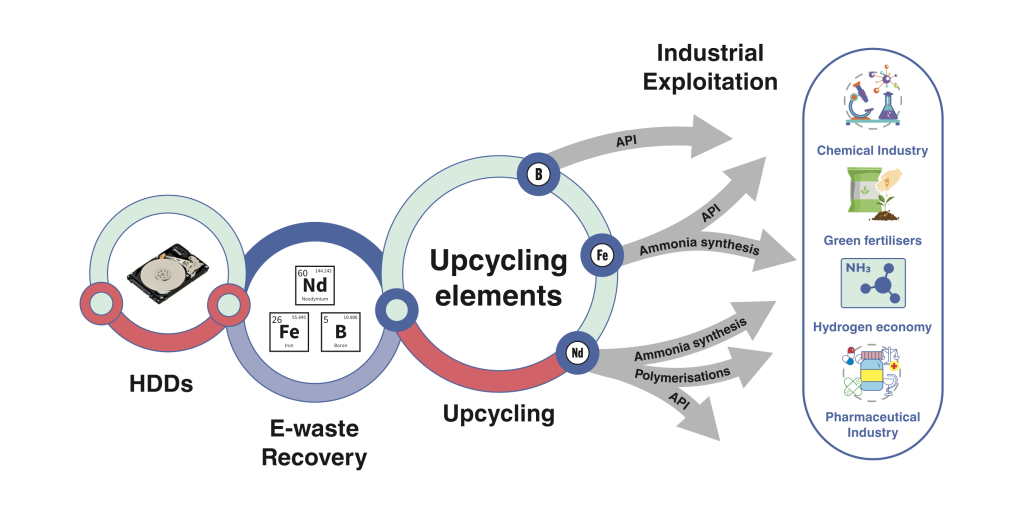
Project activities cover Solid-State Chlorination, Electrochemical and purification processes at TRL6 to separate Nd, Fe and B, upcycling approaches for Nd, Fe, and B and validation of the final products, processes and products digitalisation, including digital twins and digital product passport, sustainability assessments, standardisation roadmap, stakeholder engagement, new business models and training courses to promote inclusion and new jobs in the value chains.
More on the project activities: https://NEO-CYCLE.eu/
or

X (Twiter), LinkedIn: @NEO-CYCLE

EU-REPAIR Project Launches to Promote Sustainable Building Refurbishment Across Europe
The “Toolkit for Sustainable Optimisation of Valuable Built Environment – EU-REPAIR” project, funded by the European Climate Initiative (EUKI) 2024, officially commenced on February 1, 2025. The project, set to run for 28 months (01.02.2025 – 30.05.2027), aims to drive sustainable building refurbishment in Estonia, Germany, Lithuania, North Macedonia, and Serbia, reducing carbon emissions and strengthening climate resilience.
Coordinated by the Institute for Research in Environment, Civil Engineering, and Energy (IECE), the project brings together leading European institutions:
-Fraunhofer Institute for Building Physics (IBP) – Germany
-Vytautas Magnus University (VMU) – Lithuania
-Innovation Center University of Niš (ICUN) – Serbia
-Estonian Academy of Arts (EKA) – Estonia
EU-REPAIR focuses on equipping architects, engineers, artisans, students, and decision-makers with the knowledge and skills to implement energy-efficient repair techniques. Through hands-on workshops, hackathons, and multiplier events, the project fosters innovation and entrepreneurship in sustainable building practices. A digital learning platform will provide open access to best practices, guidelines, and case studies, ensuring long-term knowledge transfer. By integrating circular economy principles, renewable materials, and risk assessment methodologies, EU-REPAIR seeks to preserve historic buildings while aligning them with modern energy efficiency standards. A key objective is to improve national legislation and strategic documents to support energy-efficient refurbishment and climate adaptation strategies.
The first Kick-Off Meeting was held online on February 18, 2025, bringing together project partners to discuss key activities, milestones, and collaborative strategies for the successful implementation of EU-REPAIR. With its holistic approach to sustainable refurbishment, EU-REPAIR is set to make a lasting impact on Europe’s built environment, fostering a climate-resilient and energy-efficient future.
#EU-REPAIR#EUKI#refurbishment#repair#VBE#culturalheritage#buildings#ClimateChange #Sustainablebuildings #VMU
Sign on-line Conference “The Vital Nature” on May 15-16, 2025.
Dear Friends, Colleagues,
As in every spring, the 19th International multidisciplinary/interdisciplinary conference The Vital Nature Sign already is approaching. I would like to invite you to participate on-line in this Conference on May 15-16, 2025.
More information upon Conference please find in: http://vns.microsep.org/
Registration form: click here
IMPORTANT DATES
7th April, 2025 – Deadline for registration and abstract submission
25th April, 2025– Notification of abstract acceptance
5th May, 2025 – Preliminary program of the conference
GUIDELINES FOR AUTHORS
The oral presentation should not exceed 12 min (+3 min questions&discussions)
Flash-presentation should not exceed 5 min (+2 min questions&discussions). Flash presentations should cover only the relevance, the aim of the work, the main results, and the conclusions.
Co-authors who are registered and participating in the conference will also receive a certificate.
IMPORTANT. Abstracts of authors who will not be presenting their work will not be included in the abstract book.