




On November 27th at 4:00 PM in Auditorium 431, Professor Skirmantas Kriaučionis from the University of Oxford will give a lecture titled “How do DNA modifications influence DNA mutations?”
On November 27th at 4:00 PM in Auditorium 431, Professor Skirmantas Kriaučionis from the Ludwig Institute for Cancer Research at the University of Oxford (UK) will give a lecture titled “How DNA modifications influence DNA mutations?”
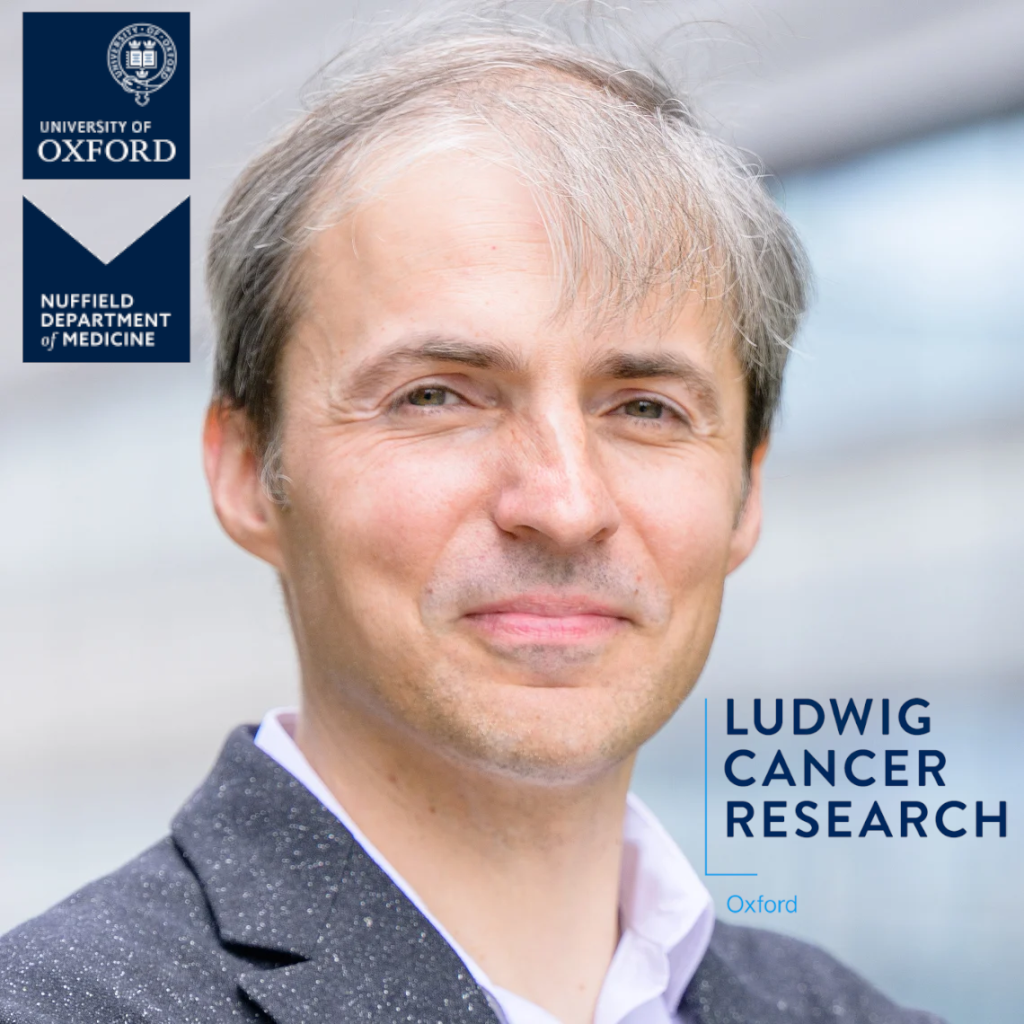
Research Areas of Professor Skirmantas Kriaučionis
The primary objective of the research program is to elucidate the molecular function of DNA modifications in normal and cancer cells. By employing biochemical and in vivo methods, the research investigates the impact of DNA modifications on transcription, inheritance, mutation rates, and nuclear organization. These fundamental studies in DNA biology help identify defects arising in cancer and develop novel targeted therapies.
Research on DNA Modifications:
Until recently, 5-methylcytosine (5mC) was the only known DNA modification in mammalian cells. Professor S. Kriaučionis’s research group, together with other investigators, discovered 5-hydroxymethylcytosine (5hmC)—a compound formed when methylated cytosine is acted upon by oxygenases of the TET enzyme family.
In dividing cells, 5hmC acts as an intermediate product of demethylation.
In post-mitotic (non-dividing) cells, 5hmC is a stable base whose function is not yet fully understood.
The Influence of DNA Modifications on Mutations:
One of the most recent studies addressed the hypothesis that stable 5hmC might influence DNA mutation rates, given that 5mC is known to be associated with an increased frequency of C-to-T transitions. Computational analysis of 5hmC localization in normal human tissues and mutation rates in cancer revealed that 5hmC exhibits a lower mutation frequency than 5mC.
Epigenetic Nucleotide Metabolism and Cancer Therapy:
Although the presence of 5hmC in the DNA strand reduces the risk of mutation, its presence in the nucleotide pool (used for the synthesis of new DNA strands) is mutagenic. 5hmC and other biologically modified bases can enter the nucleotide pool through the recycling of epigenetically modified DNA.
Studies examining epigenetic nucleotide metabolism have shown that:
-
Cytidine monophosphate kinase 1 (CMPK1) limits the production of 5hmdCTP and prevents the direct incorporation of this modified base into DNA.
-
Cytidine deaminase (CDA) deaminates 5hmdC, converting it into 5hmdU, which is then phosphorylated and incorporated into DNA, causing DNA damage.
Current research is investigating whether this phenomenon could be applied to personalized cancer therapy targeting tumors with elevated CDA expression.
Recent publications:
Platelets sequester extracellular DNA, capturing tumor-derived and free fetal DNA. Murphy L. et al, (2025), Science, 389
DNA polymerase ε produces elevated C-to-T mutations at methylated CpG dinucleotides. (2024), Nature genetics, 56, 2304 – 2305
Human DNA polymerase ε is a source of C>T mutations at CpG dinucleotides. Tomkova M. et al, (2024), Nature Genetics, 56, 2506 – 2516
Absolute quantitative and base-resolution sequencing reveals comprehensive landscape of pseudouridine across the human transcriptome. Xu H. et al, (2024), Nature Methods
Focused Screening Identifies Different Sensitivities of Human TET Oxygenases to the Oncometabolite 2-Hydroxyglutarate. Belle R. et al, (2024), Journal of medicinal chemistry